Categories:
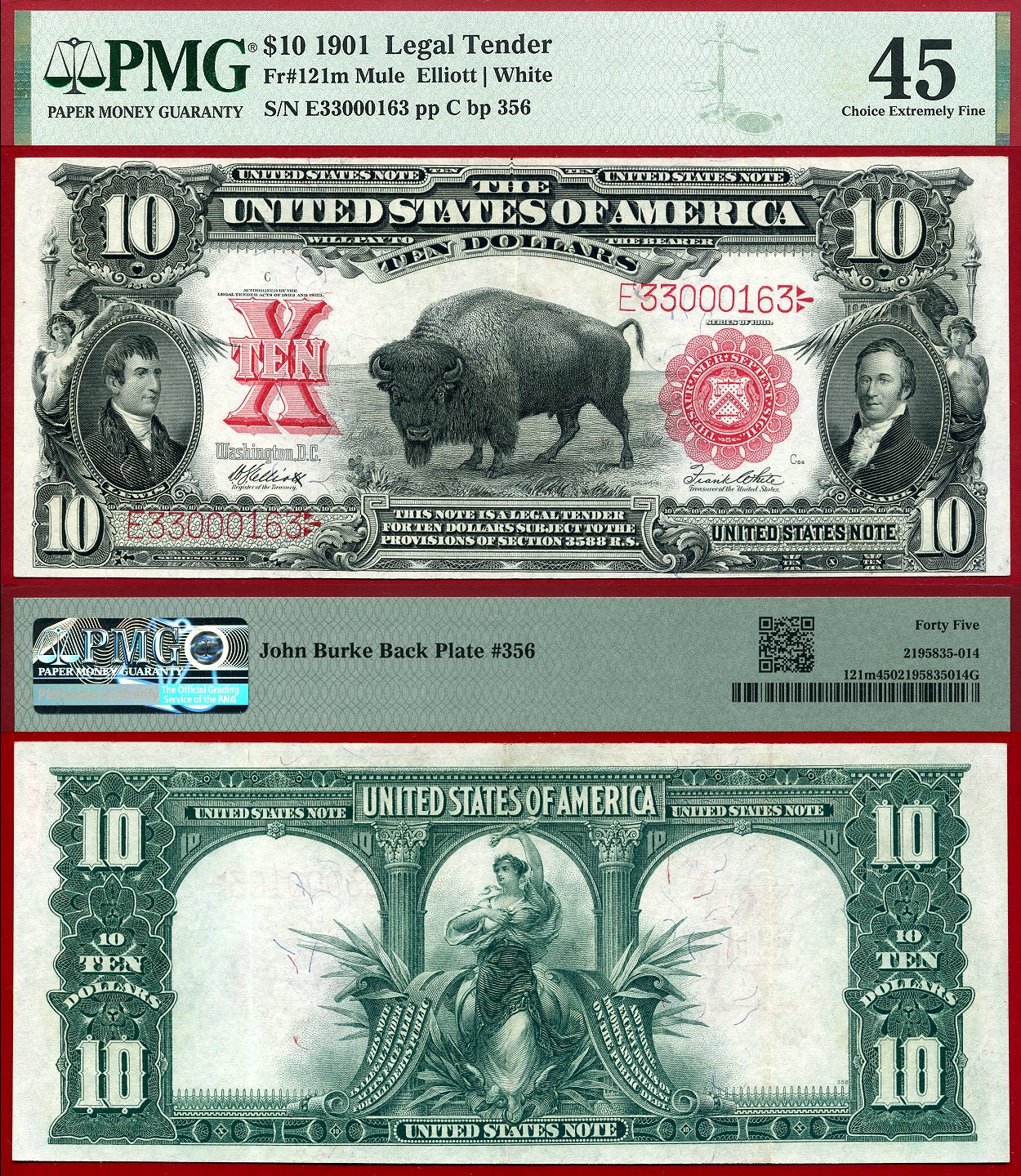
S/N E33000163 The Picture in the center of the face is an American Bison. The Portrait at the left side of the face is Meriwether Lewis and the portrait at the right side of the face is William Clark, two American explorers. The allegorical figure in the center of the back is "Columbia standing between two pillars and two scrolls".
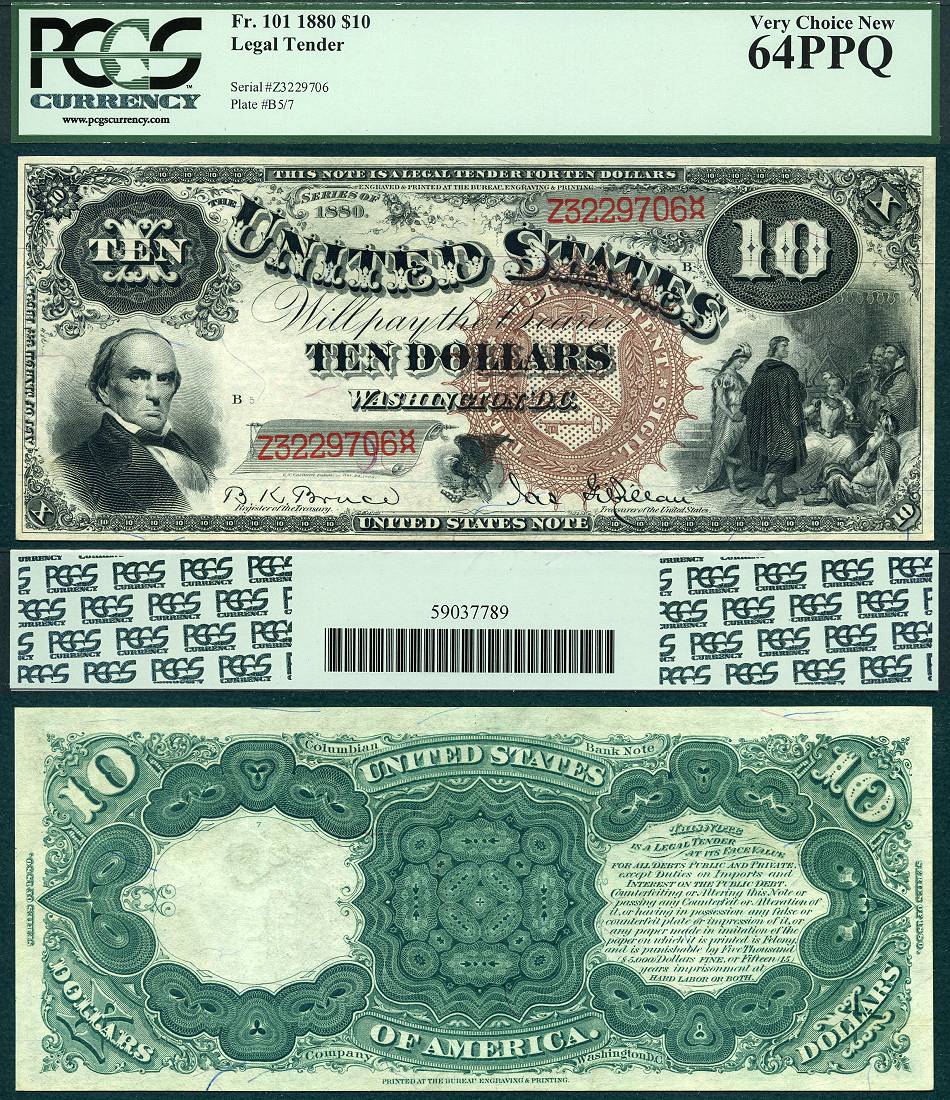
S/N Z3229706 Only 92 Known FR-101's Beautiful Brown Seals are the most popular!!, Signatures of Bruce and Gilfillan Head of Daniel Webster, U.S. Congressman and Senator; Secretary of State in 1841 and from 1850-1852 AKA "The Jackass Note" Named This Because If You Turn the Note Upside-Down the Eagle on the Front of the Note Looks Just like a Jackass.
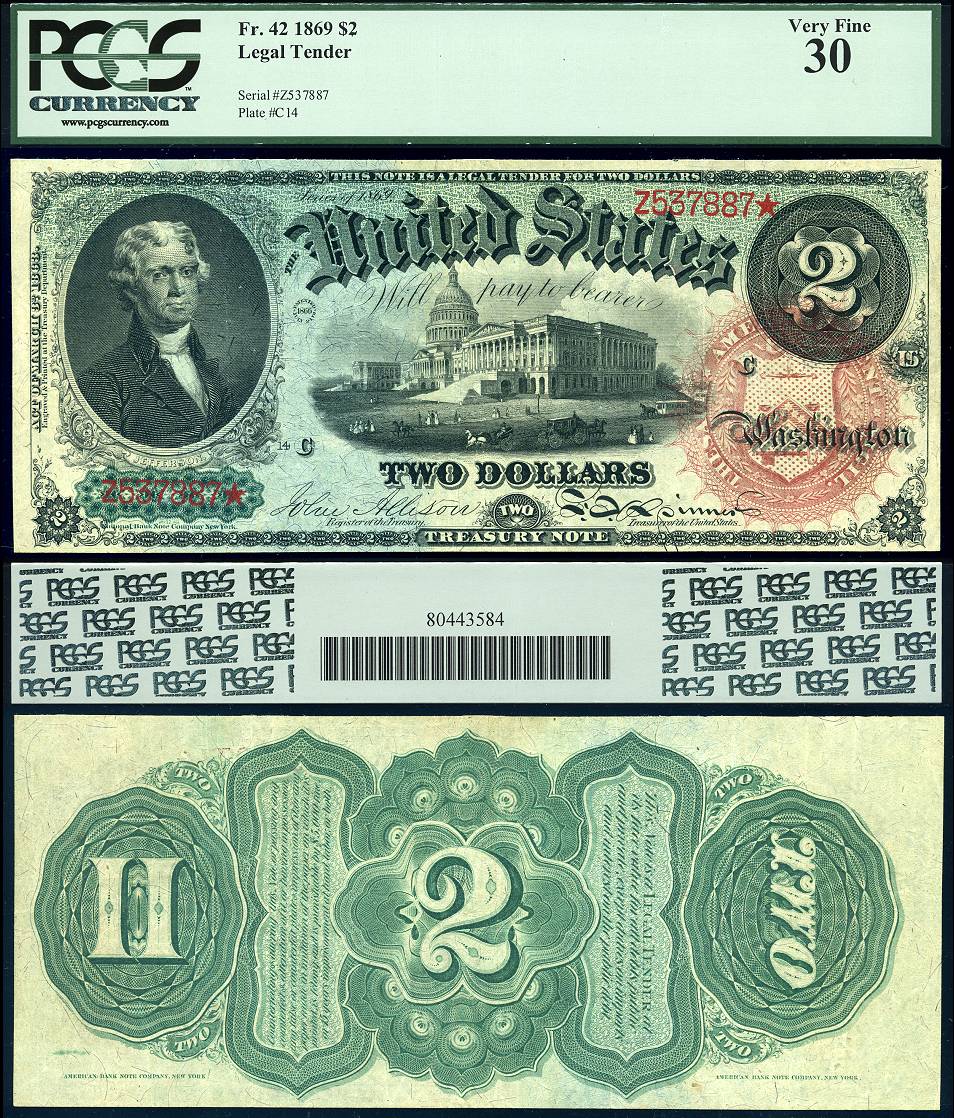
S/N Z537887 Great Note with the appearance of a much higher grade. Head of Thomas Jefferson, Third President of The United States, 1801-1805 The Portrait was engraved by James Smillie. At The Center of The Note a View of The Capitol. This One Escapes Most Rainbow Collections, Very Hard to Come By.

S/N Z635954 FR-28a Only 8 Known! This bright and original Legal Ace represents a relatively new sub-variety of Fr. 28 that was added to the 21st Friedberg edition in 2017. "Series of 1880" is found in the top margin at center on the back, and the BEP imprint is located in the back bottom margin. Friedberg 28 notes have the series date in the back left margin, and the BEP imprint is found in the back right margin. So far, very few Fr. 28a pieces have been documented, with just eight examples listed in Track & Price, including this note which displays great color and just some light folds.

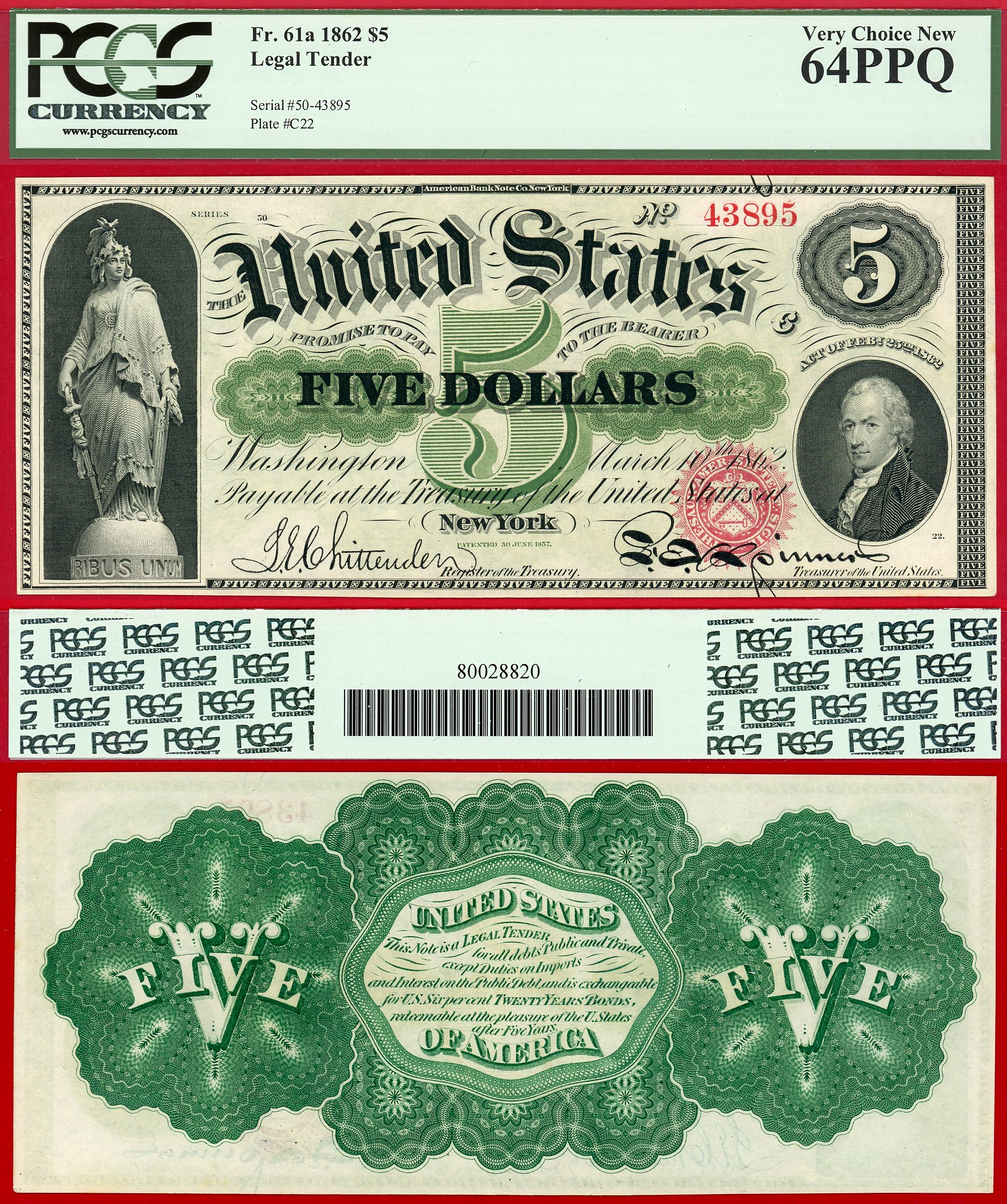
S/N 35891 Early Legal Tender Notes are a rare sight in the company of uncommon originality and eye appeal. Many known specimens offer testament to extensive circulation or showcase impairments reflective of circulation. To put it simply; early Legal Tender Notes did not hold up well in commerce in the face of circulation. Compound this with the fact that many Legal Tender Notes that featured the so-called First Obligation on the back that mentioned the convertibility of certain notes into government bonds were redeemed to take advantage of this short-lived privilege that ended in 1863. The number of survivors like this one available to collectors are nonetheless a small fraction of an already small fraction of the original quantity issued during the 1860s